Celtic shield knot tattoos
A shield knot tattoo is a square, four-cornered knot usually read as protection. Similar knots appear in many cultures, and the name Celtic shield knot is a modern label.
69 designs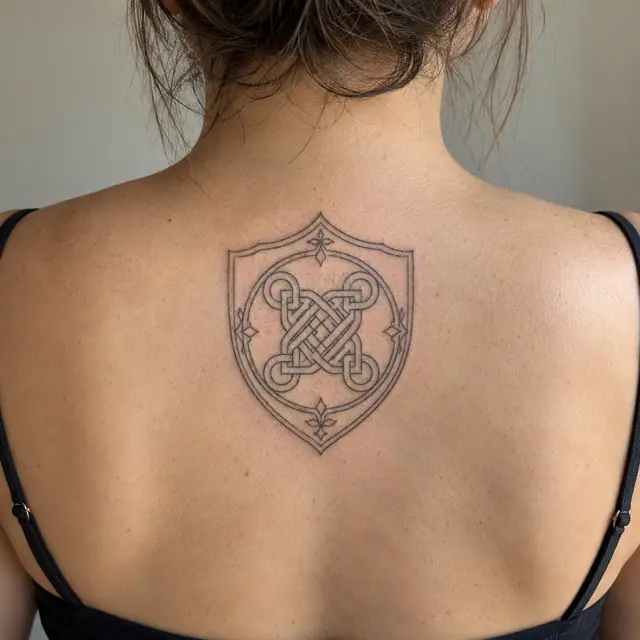
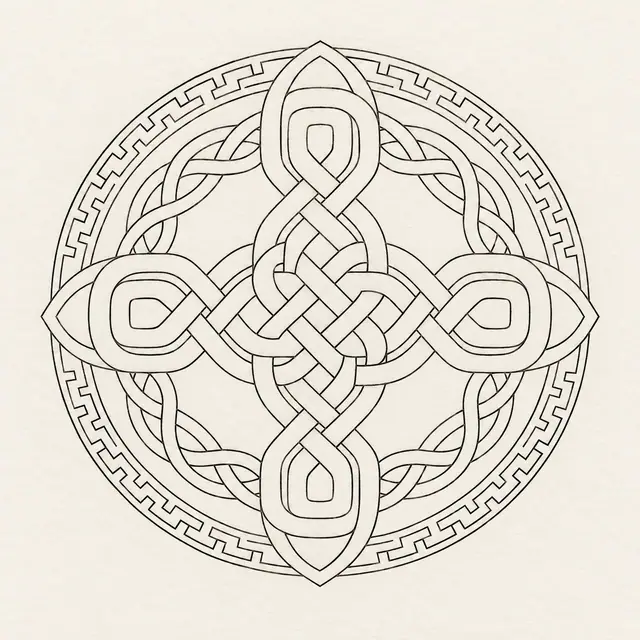
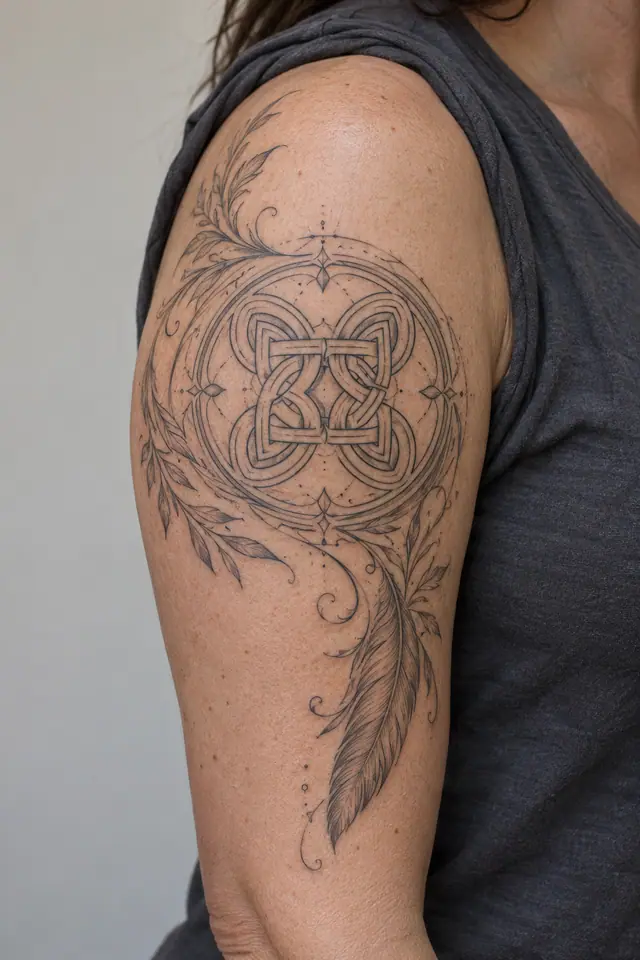
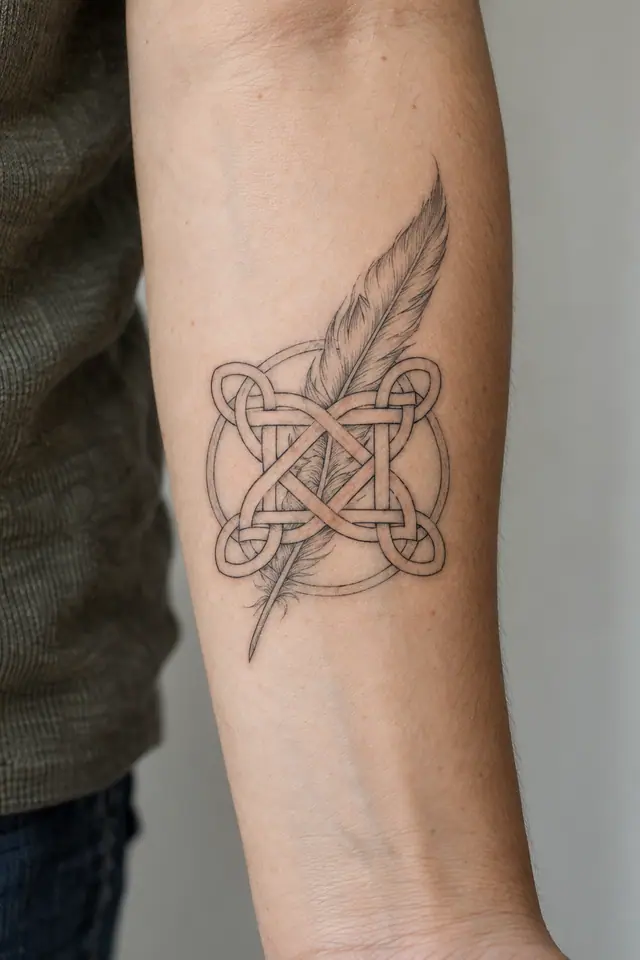
What the shield knot is
The shield knot is a square knot with four corners or four loops, all woven from one or two continuous strands. In its simplest form, it looks like a square with a loop at each corner, the strands crossing in the middle. Many tattoo versions set this knot inside a circle or a square frame, so it looks like a round shield with a woven boss in the center.
Because it’s so symmetrical, quality is easy to check. All four corners should be identical. The center crossings, where the most lines meet, should still show clean gaps. And the over-under should alternate everywhere, including where the strands meet any surrounding circle. The center is the weak point: it’s where lines bunch up first, so a good design gives it a little extra breathing room.
Where it actually comes from
The looped square, a knot with four corner loops, is one of the most widespread knot shapes there is. It shows up in many places and periods, which isn’t surprising, since it’s what you get when you weave a closed strand around four points.
In Scandinavia, a version known as Saint John’s Arms (Sankt Hans vapen) was used in folk tradition and later on Swedish signs marking places of interest. That same looped square became the Command key symbol on Apple keyboards. In Insular art from Ireland and Britain, square and four-cornered interlace panels appear in manuscripts and on carved stones, alongside many other knots.
What we don’t have is any early source calling a particular knot a “Celtic shield knot.” The name is modern, and so is the story you’ll often read online, that Celtic warriors carved or painted it on shields or bodies before battle. There’s no evidence for that, and there’s no direct archaeological proof of tattooing among the ancient Celts at all. Our page on ancient Celtic tattoos covers what the Roman writers actually said.
None of that cancels the meaning. The protective reading is modern, but it suits the shape, and it’s what most people wearing a shield knot intend.
What it is commonly taken to mean
| Reading | Status |
|---|---|
| Protection from harm | Popular modern reading |
| Four directions, seasons or elements | Popular modern reading |
| Guarding loved ones or home | Popular modern reading |
| Warrior battle charm | Not supported by evidence |
| Decorative square interlace | Attested in Insular art |
| Place of interest marker (Saint John’s Arms) | Attested in Scandinavian use |
People often get a shield knot when starting something risky (military service, a new job far from home, recovery from illness) or for a child they want to keep safe. Those personal meanings are what make it worth wearing.
Design choices
Blackwork is the natural fit. A bold, solid knot reads like carving or metalwork and stays crisp over the years. See our blackwork designs.
Outlined ribbons with a dotwork or solid fill in the background create a stamped, embossed look, as if the knot were raised on a shield face.
Fine-line works for the simple four-loop version, but skip the circle and border at small sizes.
Woad-blue suits the protective, ancestral feel many people want from this symbol.
Color is less common here, but a metallic palette (gold strands on a deep red or blue background) can look like an enameled brooch.
Placement and size
The shield knot’s shape suggests where it goes. It’s a protective emblem, so many people place it over the heart, on the upper arm, or between the shoulder blades, the way you’d wear a badge or carry a shield.
- Wrist, back of neck, behind the ear: about 1-1.25 inches, simple four-loop version.
- Chest or upper arm: 2-3 inches, room for a circle and doubled strands. See our chest designs.
- Between the shoulder blades: 3-4 inches, with a border or a knotwork ring.
- Back piece centerpiece: a large shield knot can anchor a full back design, with other knotwork radiating out.
Square, symmetrical knots look best on flatter skin. On curved areas like the shoulder cap or calf, the square can look warped from some angles.
Orientation matters more than people expect. Set square, the shield knot looks like a framed panel. Turned 45 degrees so a corner points up, it reads as a diamond and feels more dynamic, which suits the narrow space of a forearm or the back of the neck. Ask your artist to show you both on a stencil before deciding, because the difference is easy to see on skin and hard to judge on paper.
Pairing it with other symbols
A shield knot pairs well with a trinity knot set in the center, combining protection with faith or family. Ogham letters around the edge can add a name or a single word. It also works as a central boss on a larger piece of animal interlace, with a hound or boar circling it, both animals tied to strength and guarding in Irish story. If you’re planning something larger, our guide on how to design a Celtic tattoo walks through building a layout around a central knot.
Shield knot tattoo designs
Questions people ask
What does a Celtic shield knot tattoo mean?
Most people wear it as a symbol of protection, for themselves or for someone they love. The four corners are often read as the four directions, four seasons or four elements. These are modern readings that fit the shape well.
Did Celtic warriors paint shield knots on their shields?
There is no evidence for that. The idea is a modern story attached to the name. Square interlace panels do appear in Insular art, but nothing shows them used as a battle charm on shields or skin.
Is the shield knot Celtic or Norse?
Neither owns it. Four-cornered looped knots appear in many traditions, including Insular knotwork and Scandinavian folk use, where a version is called Saint John's Arms. The Celtic shield knot label is a modern name for a widely shared shape.
How small can a shield knot tattoo be?
A simple four-loop knot holds up at about 1 inch. Versions with doubled strands, a border or a circle need around 2-2.5 inches so the crossings in the middle stay open.
Related symbols
 Celtic knotUnbroken interlace, read today as eternity and connection.
 Trinity knotThree interlocked arcs, best known as the Holy Trinity.
 TriskeleA triple spiral that is older than the Celts themselves.
 Tree of lifeRoots that mirror branches: growth, family and balance.
 Celtic crossThe ringed stone cross of early medieval Ireland.
 CladdaghHands, heart and crown from 17th-century Galway.
 Dara knotA modern knot inspired by the roots of the oak.
 Motherhood knotA modern knot of two hearts, for parent and child.
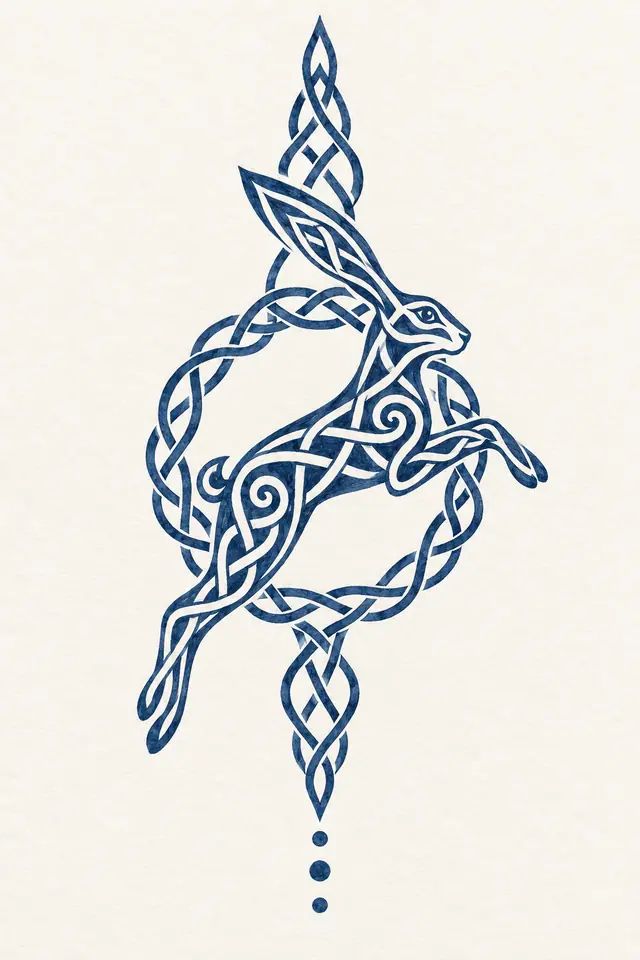 Celtic animalsWolves, stags, ravens and salmon woven into interlace.