Celtic knot tattoos
A Celtic knot tattoo is a pattern of strands weaving over and under in an unbroken path. Most designs come from Christian-era Insular art, and eternity is a popular modern reading.
138 designs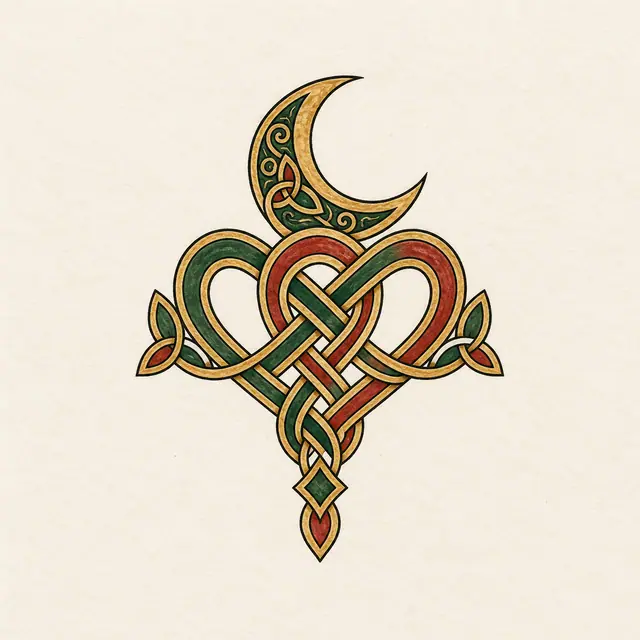
What a Celtic knot is
A Celtic knot is a band or panel of interlace: one or more continuous strands that cross over and under each other in a strict alternating rhythm. Pick any strand and follow it, and at each crossing it should go over, then under, then over again. That over-under rule is the whole craft. When it breaks, people notice something is off even if they can’t say what.
When you look at knotwork in an artist’s portfolio, check three things. First, the alternation: trace one strand through five or six crossings and make sure it never goes over twice in a row. Second, even strand width: the ribbons should stay the same thickness through curves and corners instead of pinching or swelling. Third, consistent gaps: the background spaces between strands should be roughly equal, because those gaps keep the knot readable as your skin ages. Narrow, uneven gaps are where ink spreads together first.
Where knotwork actually comes from
Most of what people now call Celtic knotwork comes from the Christian era, specifically the Insular art made in Ireland and Britain between roughly the 7th and 9th centuries. The Lindisfarne Gospels (c. 715) and the Book of Kells (c. 800) are full of it: interlace borders, knotted panels, and animals whose limbs and tongues tie themselves into patterns. The same kind of interlace appears on Pictish carved stones in Scotland and on Irish high crosses.
Older Celtic art from the La Tene period (from about 450 BC) is a different thing. It is built on spirals, swelling curves and flowing asymmetry, mostly on metalwork like shields, torcs and mirrors. Strict over-under interlace is rare in it. So a knot tattoo sits much closer to a monastery scriptorium than to an Iron Age battlefield.
That battlefield point matters, because it is the most repeated myth in celtic tattoos. There is no direct archaeological evidence that ancient Celts were tattooed at all, let alone with knots. Julius Caesar wrote that Britons colored themselves with woad (De Bello Gallico 5.14), which could describe paint as easily as tattooing. Herodian, writing later, mentioned Britons marking their bodies with designs of animals. Neither source describes knotwork. Our guide to ancient Celtic tattoos walks through what the sources do and don’t say.
The modern knot tattoo owes a lot to one man. George Bain, a Scottish art teacher, published Celtic Art: The Methods of Construction in 1951. He worked out grid methods for rebuilding manuscript knotwork step by step, and his book became the reference that illustrators, jewelers and tattoo artists learned from. A great deal of later flash traces back, directly or not, to Bain’s plates.
What it is commonly taken to mean
The most popular reading today is eternity: a line with no beginning or end stands for lasting love, faith, loyalty or connection. That reading is modern and widely shared, and it suits the form. It is not something the scribes of the Book of Kells wrote down. In the manuscripts, knotwork honored the sacred text it surrounded, and any meaning it carried was devotional.
| Reading | Status |
|---|---|
| Eternity, unbroken love or loyalty | Popular modern reading |
| Interconnection of people or of life | Popular modern reading |
| Ornament framing and honoring scripture | Historically attested use |
| Warrior protection marks | Not supported by evidence |
It’s completely fine to choose a knot because the eternity idea speaks to you. It just helps to know which part is history and which part is the meaning you bring to it.
Design choices
Blackwork is the classic option. Solid black ribbons with clean, open gaps hold up best over decades. If you like strong contrast, look for heavy, even ribbons in an artist’s healed photos.
Outlined ribbons (two parallel lines per strand with skin showing inside) look elegant, but they need more room because you are doubling the number of lines in the same space.
Fine-line knotwork looks delicate on fresh skin, but thin lines with tight gaps are the first to soften. Keep fine-line knots simple and space them generously.
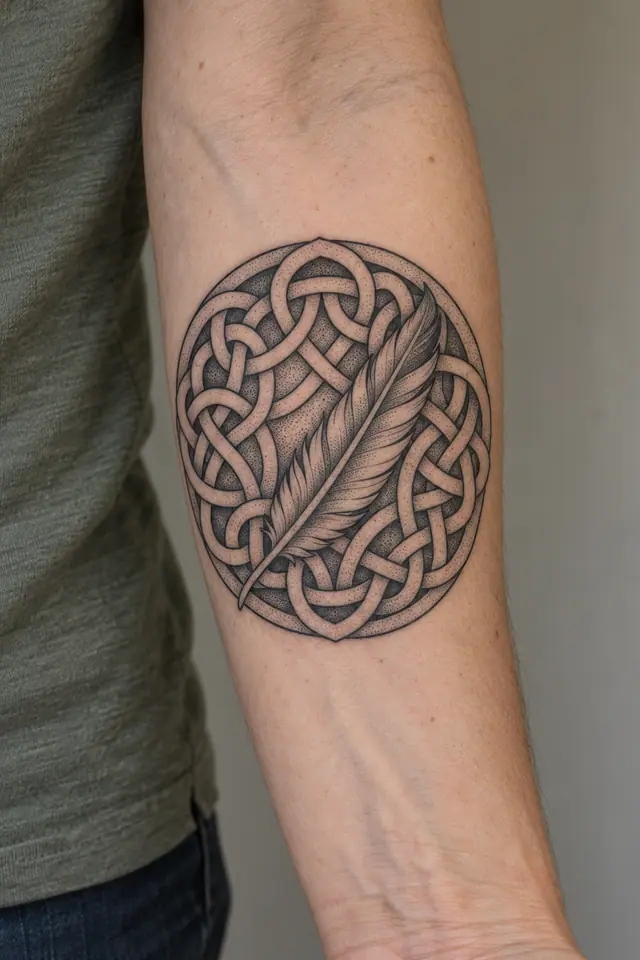
Dotwork fill inside outlined strands adds texture and a hand-tooled feel, and it shades well without heavy solid black.
Illuminated-manuscript color borrows the yellows, reds, greens and blues of the Book of Kells. It works best at larger sizes, where each color field can be at least a few millimeters wide.
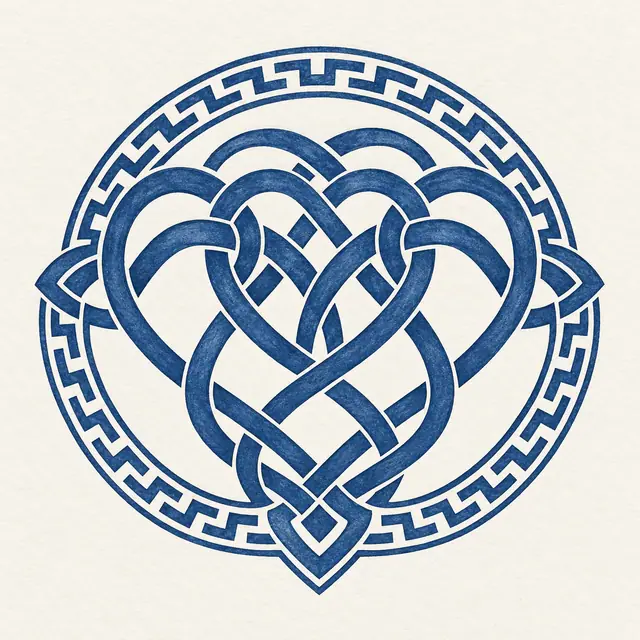
Woad-blue ink is a popular nod to Caesar’s description. Deep indigo and blue-black tones hold reasonably well. Very pale blues fade faster, especially on sun-exposed skin.
Placement and size
Knotwork comes in two broad shapes: bands and panels.
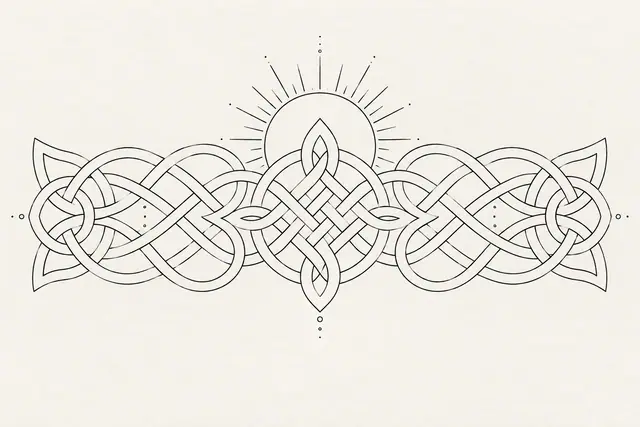
Bands suit the upper arm, forearm, calf and ankle. A classic armband is usually 1.5-3 inches tall. Below about 1 inch tall, choose a simple two-strand plait rather than a dense multi-strand knot. Bands that wrap fully around a limb need careful measuring, since the pattern has to meet itself cleanly at the seam.
Square or circular panels suit the shoulder, chest, upper back and outer forearm. As a rough guide, a moderately complex panel should be at least 2.5-3 inches across, so the gaps between strands stay around 1.5-2 mm or wider. A 1-inch wrist knot should have only a handful of crossings.
Skin that bends and stretches (inner elbow, back of the knee, ribs) distorts geometry as you move, so tight symmetrical knots look best on flatter areas. Our Celtic tattoo placement guide covers how each body area treats linework.
Pairing it with other symbols
Knotwork is the connective tissue of Celtic design. It frames other symbols well: a band of interlace around a trinity knot, a knotted border inside a cross, or animal interlace where bodies become the strands. If you’re combining several elements, plan the knot last, so its strands flow around the main motif instead of competing with it. For a working method, see how to design a Celtic tattoo.
Celtic knot tattoo designs
Questions people ask
What does a Celtic knot tattoo mean?
Today it is most often read as eternity or unbroken connection, because the strands have no visible start or end. That meaning is modern. In the medieval manuscripts where knotwork comes from, it worked as sacred decoration rather than a coded message.
Did ancient Celtic warriors have knot tattoos?
There is no evidence they did. Roman writers mention Britons coloring their bodies with woad and marking them with animal designs, but none describe knotwork. Most Celtic knotwork dates from the Christian era, roughly the 7th to 9th centuries.
How small can a Celtic knot tattoo be?
A simple knot with only a few crossings can work at about 1 inch. Denser panel knots need roughly 2.5-3 inches or more, so the gaps between strands stay open as the ink settles over the years.
Can I get a Celtic knot if I am not Irish or Scottish?
Knotwork has been a shared decorative tradition across Ireland, Britain and beyond for centuries, and most people do not treat it as off limits. Learning where it comes from and getting a well-drawn design is the best way to wear it respectfully.
Related symbols
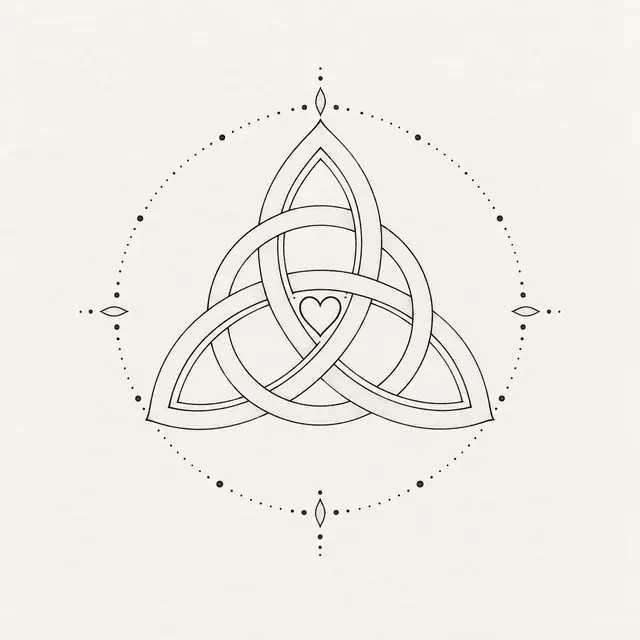 Trinity knotThree interlocked arcs, best known as the Holy Trinity.
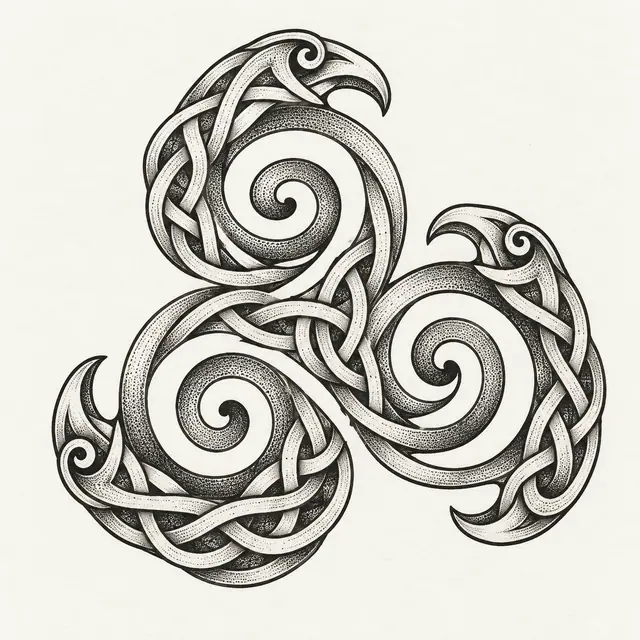 TriskeleA triple spiral that is older than the Celts themselves.
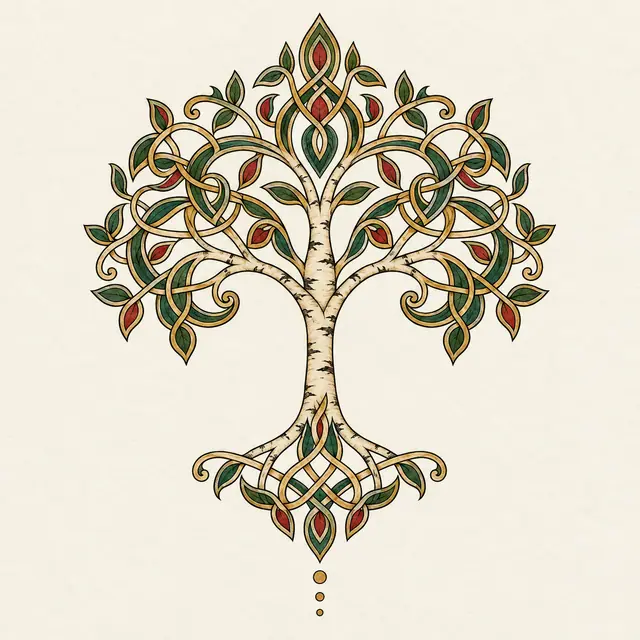 Tree of lifeRoots that mirror branches: growth, family and balance.
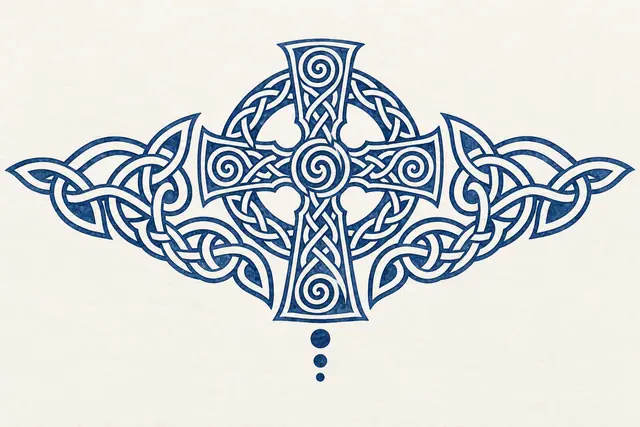 Celtic crossThe ringed stone cross of early medieval Ireland.
 CladdaghHands, heart and crown from 17th-century Galway.
 Shield knotA four-cornered knot worn for protection.
 Dara knotA modern knot inspired by the roots of the oak.
 Motherhood knotA modern knot of two hearts, for parent and child.
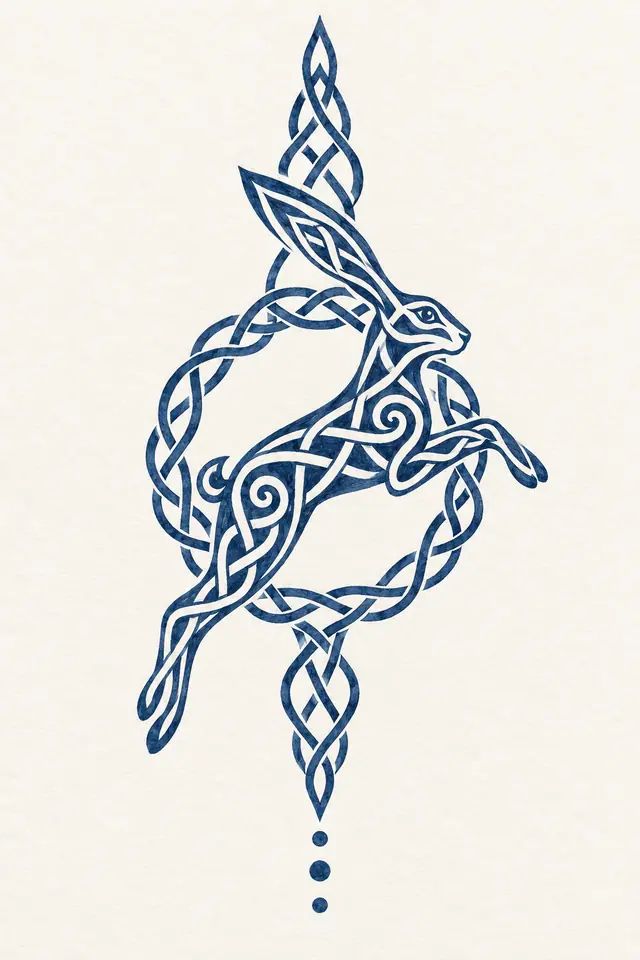 Celtic animalsWolves, stags, ravens and salmon woven into interlace.